
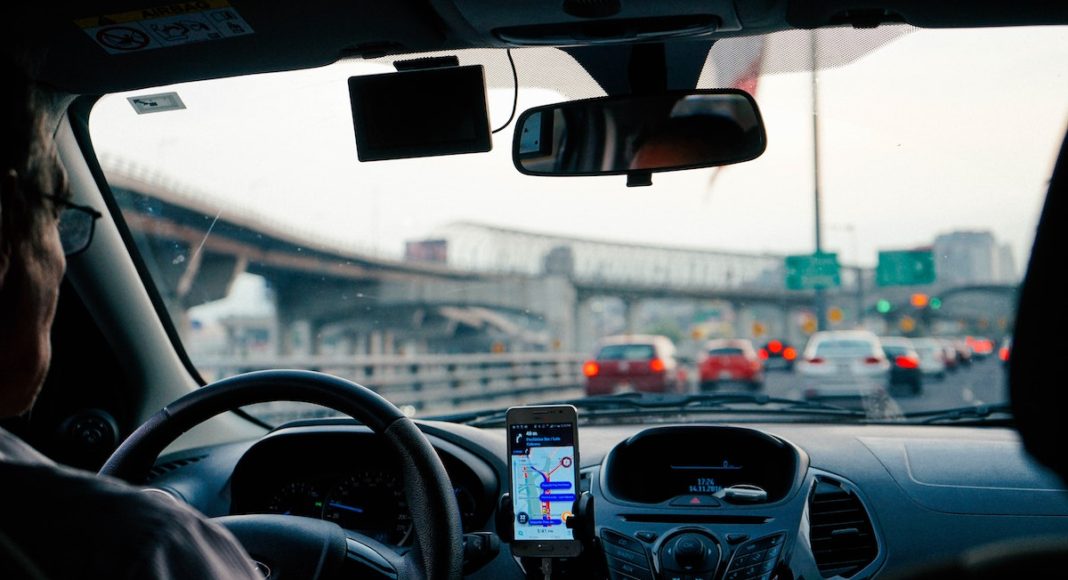
Both Uber and Lyft are popular car riding services.
Personally, I use Lyft and Uber a few times a week and even have an Uber ride pass since I use it so often.
But if you are looking for top ways to get paid for driving, then these rideshare apps provide you with a great source of income.
For all the potential drivers who want to know who pays better between Uber and Lyft in 2026, we have got you covered.
Take a closer look at what you can get by working for either of these gig economy apps in 2026.
Quick Answer
- Uber drivers earn slightly more per hour on average in 2026 (about $21/hr vs Lyft’s $19-20/hr) mostly because Uber has more riders and less idle time.
- Lyft takes a smaller cut per ride, so it can pay better on a trip-by-trip basis in its stronger markets.
- Most full-time drivers run both apps at once and take whichever ride pays more in the moment.
Uber vs. Lyft: drivers comparison guide (2026)
Driving for both Uber and Lyft at once is worth it if you have the time, since it boosts your overall income. In fact, dual-apping can lift monthly earnings by 15-25% compared to sticking with just one platform.
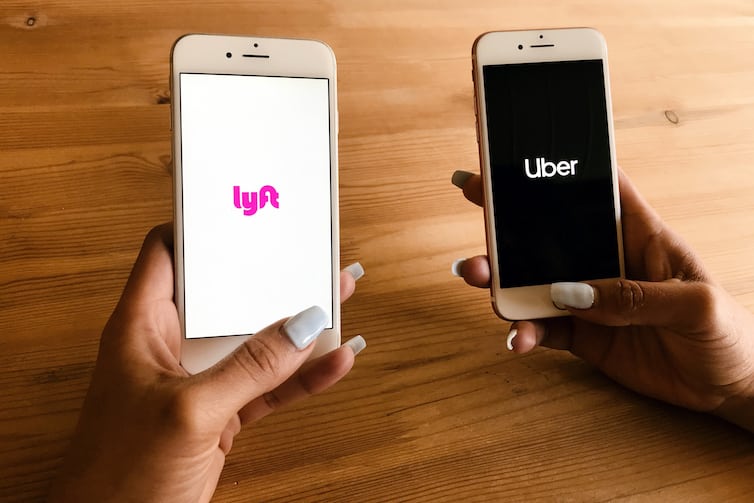
But if you’d rather stick with one app, here’s what you need to know to pick the right one.
Key similarities between Uber and Lyft
- Both run entirely through a smartphone app, so you log on and off whenever you want.
- Both price rides based on distance, time, vehicle type, and base rate.
- Both let riders add a tip after the trip ends.
- Both boost pay during high-demand windows (Uber calls it surge, Lyft calls it Prime Time).
- Both let you rent or buy a vehicle through their programs if you don’t already have one.
Key differences between Uber vs. Lyft
- Uber is bigger everywhere: roughly 70-72% of the US market vs. Lyft’s 28-32% in 2026.
- That means shorter waits between rides for Uber drivers, especially outside big cities.
- Uber’s vibe skews more professional; Lyft’s skews more fun and casual.
More Riders. Less Waiting. More Money.
Uber’s bigger market share means shorter gaps between rides for you. Get started today.
Sign Up to Drive for Uber →How to drive using a rental car?
No car that qualifies? No problem. As long as you can pass the background check and meet the other Uber vehicle requirements (or Lyft’s), you can simply rent a car built for ridesharing.
Who pays more in 2026?
The pay gap has narrowed a lot since the early rideshare days. Here’s the fast version, then the details:
| Factor | Uber (2026) | Lyft (2026) |
|---|---|---|
| Avg. hourly pay (gross) | ~$21/hr median | ~$19-20/hr median |
| Service fee / commission | 20-28% per ride | ~14% avg, capped at 30% |
| Booking fee | $2-$3.50 | $1-$2.50 |
| US market share | ~70-72% | ~28-32% |
The short version: Uber drivers earn a bit more per hour overall, mainly because there’s more ride volume and less idle time. Lyft takes a smaller bite per ride, so it can pay out more on a trip-by-trip basis, especially in cities where Lyft is strong.
Your actual take depends on your city, vehicle, expenses, and the hours you drive. As for fees, Uber still takes the bigger cut: 20-25% on standard UberX, up to about 28% on premium tiers like XL, Comfort, SUV, and Lux. Lyft caps its total monthly fee at 30% and refunds drivers the difference if it goes over, averaging around 14% in practice.
Want the Higher Hourly Average?
In 2026, Uber drivers out-earn Lyft drivers per hour in most US markets. Start driving and see for yourself.
Start Driving with Uber →Booking fees
Booking and operating charges are baked into the rider’s upfront price and go straight to the company, not the driver. These vary by city, but as of 2026:
- Uber: roughly $2 to $3.50 per ride
- Lyft: roughly $1 to $2.50 per ride
Lyft still tends to run a bit lower on booking fees, though both companies adjust these often, so it’s worth checking both apps before you commit to a ride.
What are real drivers actually making in 2026?
You’ll often hear that drivers make $20-$30/hour or more. That’s closer to true in 2026, but it still depends on your city and hours.
- Gross pay before expenses: Uber $18-26/hr, Lyft $17-24/hr
- Big metros (NYC, LA, Chicago, SF): the gap is small enough that it rarely matters which app you pick
- Smaller markets: Uber tends to pull ahead thanks to shorter wait times
- Net take-home after expenses: most full-time drivers land around $12-19/hr on either platform
Turn Your Car Into a Paycheck
Set your own hours, get paid weekly, and keep 100% of your tips. See what you could earn.
Get Started with Uber →Factoring in driving expenses
Gas and maintenance costs vary by vehicle, age, and condition. Older cars usually cost more to keep running, and for both apps, these expenses eat into your take-home pay.
You can deduct actual expenses (gas, oil, insurance, registration, repairs, depreciation), or use the standard IRS mileage rate, which is $0.725 per mile in 2026. For most drivers, the mileage rate ends up being the bigger deduction, so track every mile.
Rewards and bonuses
Both platforms sweeten the deal with weekly promotions, fuel rewards, and frequent-driver bonuses.
- Lyft: cash bonuses at Gold and Platinum tiers, ride credit, gas cash back on the Lyft Direct debit card, discounted tax prep and roadside assistance, cell plan savings.
- Uber Pro: a rewards program that recognizes top drivers and helps you reach your goals on and off the road.
Which is better in 2026?
Better atmosphere and driving experience: Uber. Better total hourly pay in most markets: also Uber, mostly due to volume. Better per-trip take in its strong markets: Lyft, thanks to its lower, capped fee.
The real answer for most drivers: run both apps and take whichever ride pays more in the moment, rather than committing to just one.
2026 Driver Pay Update
Uber Drivers Are Out-Earning Lyft Drivers in Most Markets
Higher ride volume means shorter waits between trips and more money in your pocket per hour. If you want the bigger paycheck, Uber is the platform to start with in 2026.
Sign Up to Drive for Uber →Set your own hours. Get paid weekly. No office required.
Other ways to earn with your car
Not into driving people around? There’s another way to put your car to work.
Got an idle car in the driveway, or still holding onto the old minivan? Turn it into income by renting it out on Getaround.
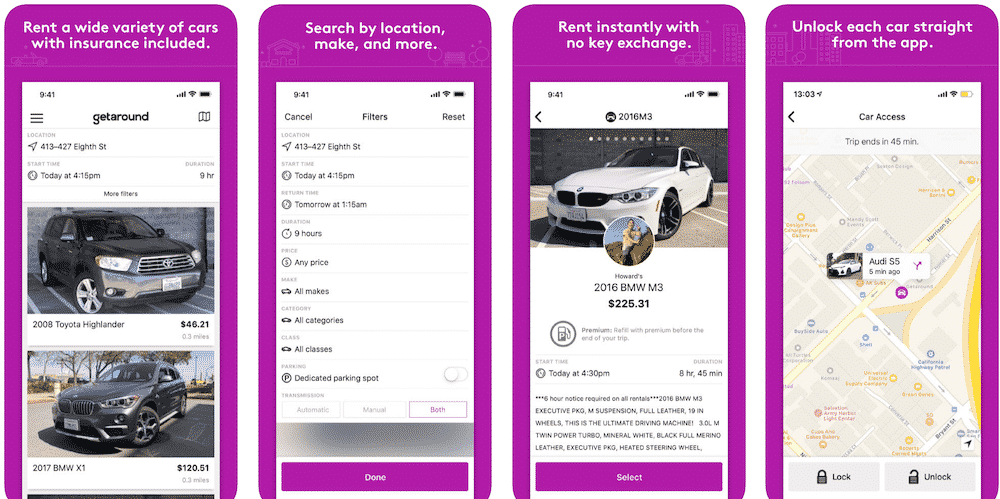
Getaround lets you safely rent your car to people in your community. It insures every trip up to $1 million, offers 24/7 roadside assistance, and screens renters for a clean driving record. That’s more peace of mind than you’d get handing keys to a teenager.
Here’s how it works:
- Sign up by clicking here.
- Set your own rates and availability.
- Get notified when someone books your car.
- Renters unlock and lock your car from their phone with Getaround Connect™, no in-person key exchange needed.
Like any side gig involving your car, wear and tear is a fair concern. Getaround handles that by having renters cover the fuel used on their trip, and you control availability through their online calendar so you always know where your car is.
Related: Turo vs Getaround – Which is Best to Rent Out Your Car?
Uber vs. Lyft summary (2026)
Free nights and weekends? You can earn solid extra cash driving. Both apps let you log on whenever it’s convenient, and both offer a destination filter so you can pick up rides heading your way on a commute.
Plenty of people do this full time, so doing it a few times a week on the side to make extra money is very doable.
Uber has the bigger footprint and, in 2026, tends to win on total hourly pay in most US markets thanks to ride volume. Lyft stays competitive per-ride thanks to its lower, capped fee.
Bottom line: In 2026, Uber generally edges out Lyft on total hourly earnings in most markets, while Lyft can still pay better per individual ride in its stronger local markets. Running both apps at once is the best way to maximize your income either way.
Ready to Start Driving?
Join the platform that’s putting more money in drivers’ pockets in 2026. Sign up in minutes and start accepting rides on your own schedule.
Become an Uber Driver →Sources: Ride-Share.com · WalletGrower · Side Quest Hustle · ShiftTracker · RideWise · RideWise (fees) · TripLog · Lyft · RentUFS

While everything i read when comparing uber vs lyft to be true in some cities like New York, LA and Chicago. That’s not the case in Florida. The only time I found it very interesting to work for uber and make money was around spring break. Uber does not take into account the distance you drive to go and pick up a rider. They could send you to pick up a rider that is 20 to 25 minutes away (in Florida of course) and that ride could be 3 to 4 dollars and change and even less sometimes. They give you incentives to encourage you to make more money by making more pick-ups, but the downside is you have to work harder by going far most of the time for those rides even if the map in your area shows that there are plenty of rides available. While you could make 20 rides for a day, it’s not surprising that you could end up making 10 -11 trips for the day doing long trips that don’t pay enough sometimes. I used to work in NY for different car services and I would make more money for a few trips than I make in a day driving 10 to 12 hours for uber in Florida. For anyone who knows the Brooklyn area, a trip from sunset park to Newark Airport is 95 dollars with toll included. That means that trip costs 75 dollars when the toll was 20 dollars. If you end up making 3 Airport trips to jfk , that’s about 120 dollars plus other local trips ranging from 7 to 12 dollars depending on the distance. In short, for someone driving 10 hours in NY, you would definitely make 200 dollars and still spend less on fuel as you don’t have to drive far for those pick-ups. Do you know that I made 128 dollars and change with a little toll included by taking 2 riders to Orlando Airport that took me 2h35 minutes for 173 miles ? That was a killer! But I like my freedom despite all the headaches you get after a long day of work.
Comparing NYC to Florida isn’t a fair comparison. Maybe compare NYC to Miami and Ft Lauderdale but the rest of florida is spaced out and everuone has a car. A bit like NY outside of NYC. Density of population makes it profitable. As soon as you go countryside then I find it is more profitable to try to get airport runs. Like Leesburg to Orlando or Daytona to Orlando, West Palm to Ft Lauderdale. There isn’t as much demand in Florida outside Miami Dade because everyone has cars due to lack of deopendable public transit. Moral of the story, Big cities with dense population is more profitable, rural town try to make 2 trips a day to airports and call it a day.
I use stride. Let’s me deduct my miles between rides.
Good article. I have about 1200 rides in Las Vegas. I drive both Uber and Lyft and I agree with the article for sure.
Thank you for the vote of confidence, Jason. We aim to provide quality and informative articles like this for gig workers just like yourself and our readers. Cheers!
I have given more than 10,000 rides in 6 years. Lyft rides definitely pay less. And Lyft riders definitely tip less. No doubt about it.